I love Emily Gould, and her recent piece for The Cut, Why Does Every Famous Woman Have a Book Club Now?, is exactly the kind of content I live for. She writes about how Dakota Johnson is the latest actress/musician/model/generally famous woman to launch a book club. By now, book clubs like Reese Witherspoon’s and Read With Jenna are popular enough to have stickers on their chosen books, but other famous women have started their own that may be less familiar outside of their fan base. I first noticed that Dua Lipa, for instance, had begun sharing her picks on the Tertulia app. Florence Welch apparently has a book club, too. Gould also talks a bit about how certain books get chosen to be seen in movies and the social media phenomenon of people like Kylie Jenner simply being photographed with a book. Jenner has a book concierge who chooses which titles are Instagram worthy enough for her. Seriously, how do I get that job??
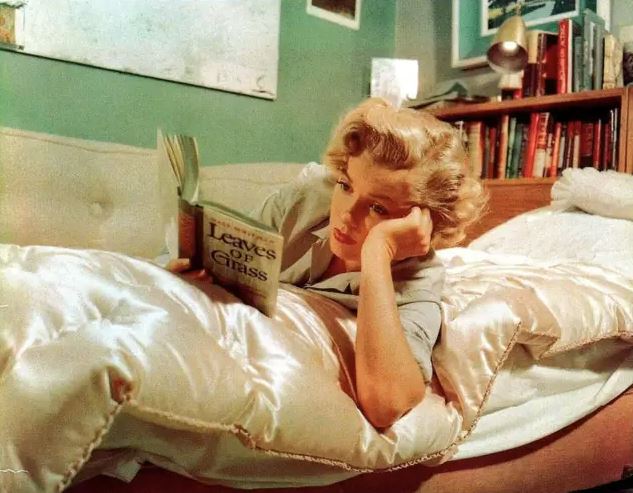
In reflecting on this theme of “women being seen reading,” I couldn’t help but think about Marilyn Monroe. She was photographed many times over the years reading books, newspapers, and film scripts, and her personal library even contained over 400 books. It’s been said that she was portrayed as a “dumb blonde” on screen, although I think this is a huge disservice to the characters she played, who were often too clever by far. Still, Monroe continuously fought to be seen as a serious actor. Her relationship with Lee and Anna Strasberg, who interited her estate, and their famous Method acting classes formed the backbone of her process and work as an actor.
In Hollywood a girl’s virtue is much less important than her hairdo. You’re judged by how you look, not by what you are. Hollywood’s a place where they’ll pay you a thousand dollars for kiss, and fifty cents for your soul.
From My Story by Marilyn Monroe
Was Oprah the first to start a celebrity book club? I can’t recall one before hers, but certainly Oprah’s Book Club paved the way for this new edition of famous women. She’s still running hers, too! Begun in 1996, Oprah has chosen 104 books so far. Do you remember the first title? It was Deep End of the Ocean by Jacquelyn Mitchard. In the years when Oprah had her talk show it was a big deal to be chosen for her book club. (Unless you’re Jonathan Franzen, but that’s a post for another day.) She’d announce the latest book on one show and then have a follow up with the author on another. Of course, this was all before social media, so getting audience members to tune in for these events had the sort of cachet that now happens over on Instagram and BookTok. This isn’t bad; it’s just different. Times change, and I think however people are encouraged to read is a good thing.
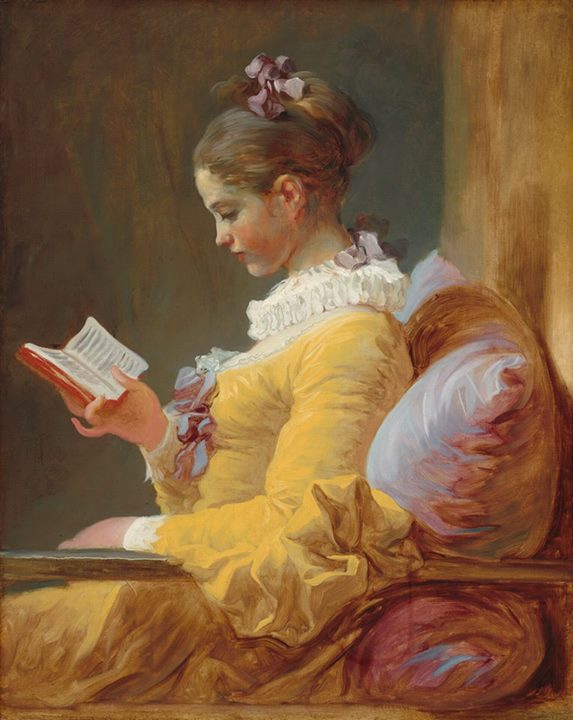
Gould’s article begs the obvious question, though: where are all the famous men’s book clubs? Writing for Jezebel last year in Do Famous Men Know How to Read?, Katy Ruth Ashcraft took note of how “the literati within Hollywood is a matriarchy” and that book clubs geared towards men are scarce in general. I feel like men more often simply announce what they’re reading as a one-off or in lists like Barack Obama. Maybe there’s something to be said for such a take it or leave it approach. I do wonder if, like Marilyn Monroe’s desire to prove herself as a serious actor, some of today’s famous women’s book clubs don’t carry a similar burden.
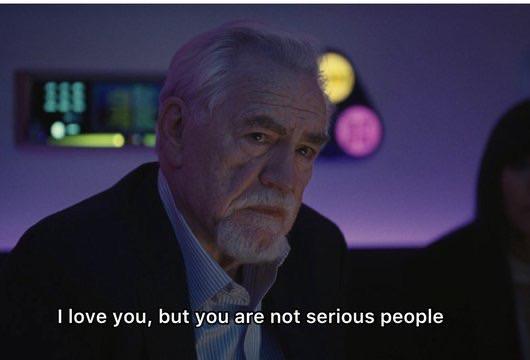
On the surface, it’s an easy, low stakes way for celebrities to interact with their fans. It also subverts the tabloid model of promoting gossip by encouraging people to focus on a famous woman’s intellect. My eyes are up here, if you will. For her part in the famous woman book club landscape, Dakota Johnson describes hers as “literary fiction. It’s not beach reads. It’s not silly. It’s not all female authors, but it is female-forward, and it’s a lot of first-time novelists.” There’s a lot to unpack in that description and, while I’m not about criticizing what anybody else enjoys reading, I appreciate that Johnson’s focus seems to be less on bestsellers and more on highlighting unique viewpoints. Beautyland by Marie-Helene Bertino is her first pick. At the end her essay, Gould notes that “cultivating bookishness is as good a way as any to transition from one career phase to a more multidimensional one.” I’m not sure I completely agree with such a tidy summation, especially since the longevity of these famous woman book clubs is hard to predict. Maybe one day I’ll write a longer essay tying some of these threads together, but for now I’ll continue being a book club voyeur.
 Literary Devices